How social commerce is driving digital growth in Southeast Asia

Southeast Asia continues to see one of the most dynamic digital commerce transformations in the world. With a young, mobile first population and rapidly evolving digital infrastructure, the region is reshaping how consumers discover, evaluate and purchase products online.
The region’s eCommerce market is expected to reach a gross merchandise value (GMV) of USD 410 Bn by 2030 from current USD 185 Bn. making it one of the fastest growing eCommerce markets in the world.
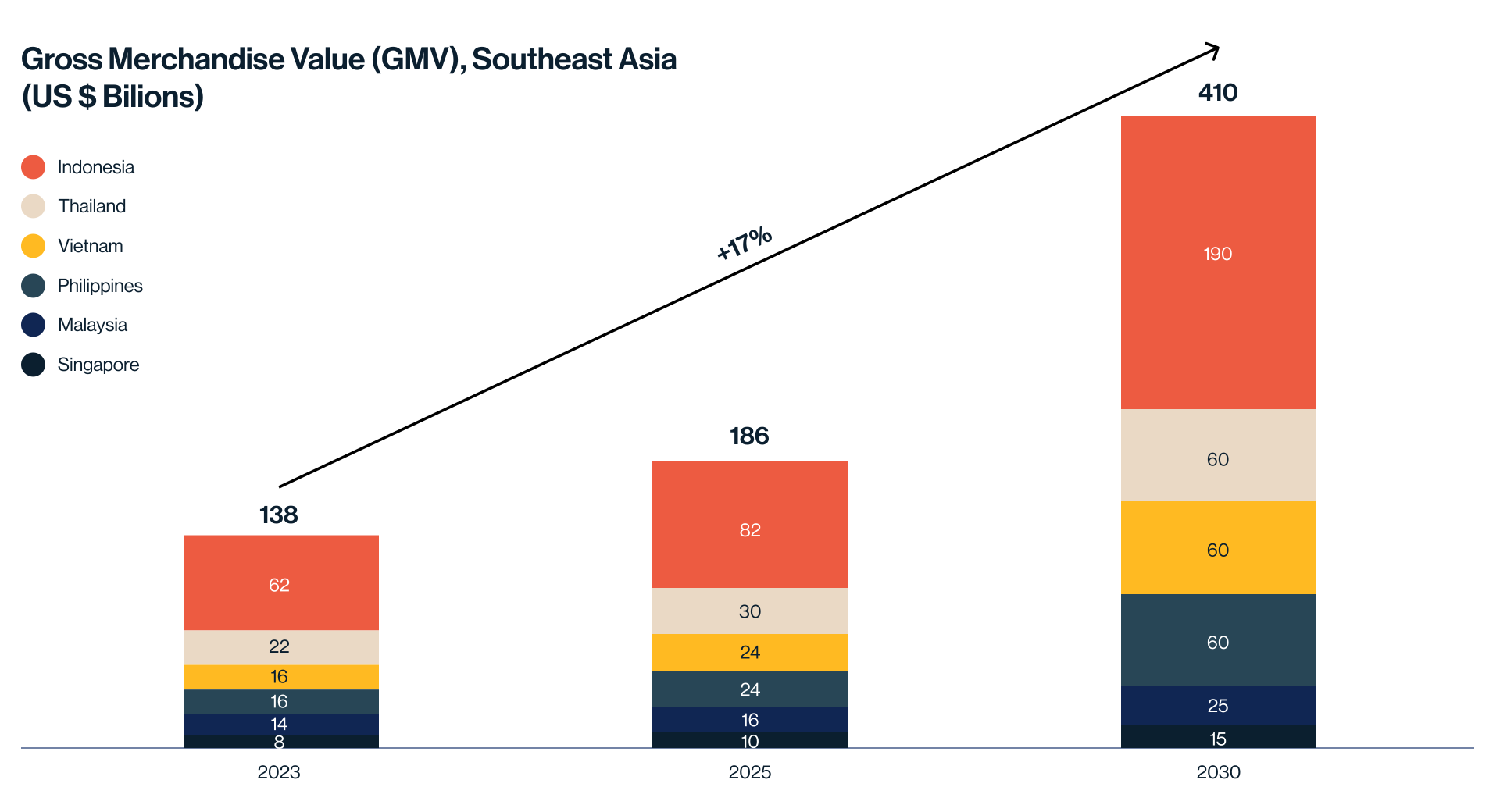
Fuelled by a mobile-first population and rapid digital adoption, the region is witnessing a transformation in how consumers discover, engage with, and purchase products online. The convergence of digital payments, social commerce, and a growing digital ecosystem has created fertile ground for innovation and scale. As we explore the key drivers behind this growth, it becomes clear that digital is not just an enabler, it is the engine powering the future of commerce in Southeast Asia.


Future growth engines: social commerce
What do we mean by social commerce? Given that Gross Merchandise Value (GMV) is the total value of goods sold through e-commerce platforms, social commerce represents the portion sold via live streaming, in-app purchases, and integrated shopping features on social media, while the creator economy covers how creators earn income from sources like advertising, subscriptions, influencer and affiliate marketing.
Social commerce, projected to grow from USD 20 Bn today to 120Bn by 2030 in GMV, expanding creator economy set to be USD 80 Bn in 2030, and affiliate driven sales are expected to power the next wave of growth. Logistics innovation and digital payments will continue to drive reach and efficiency.
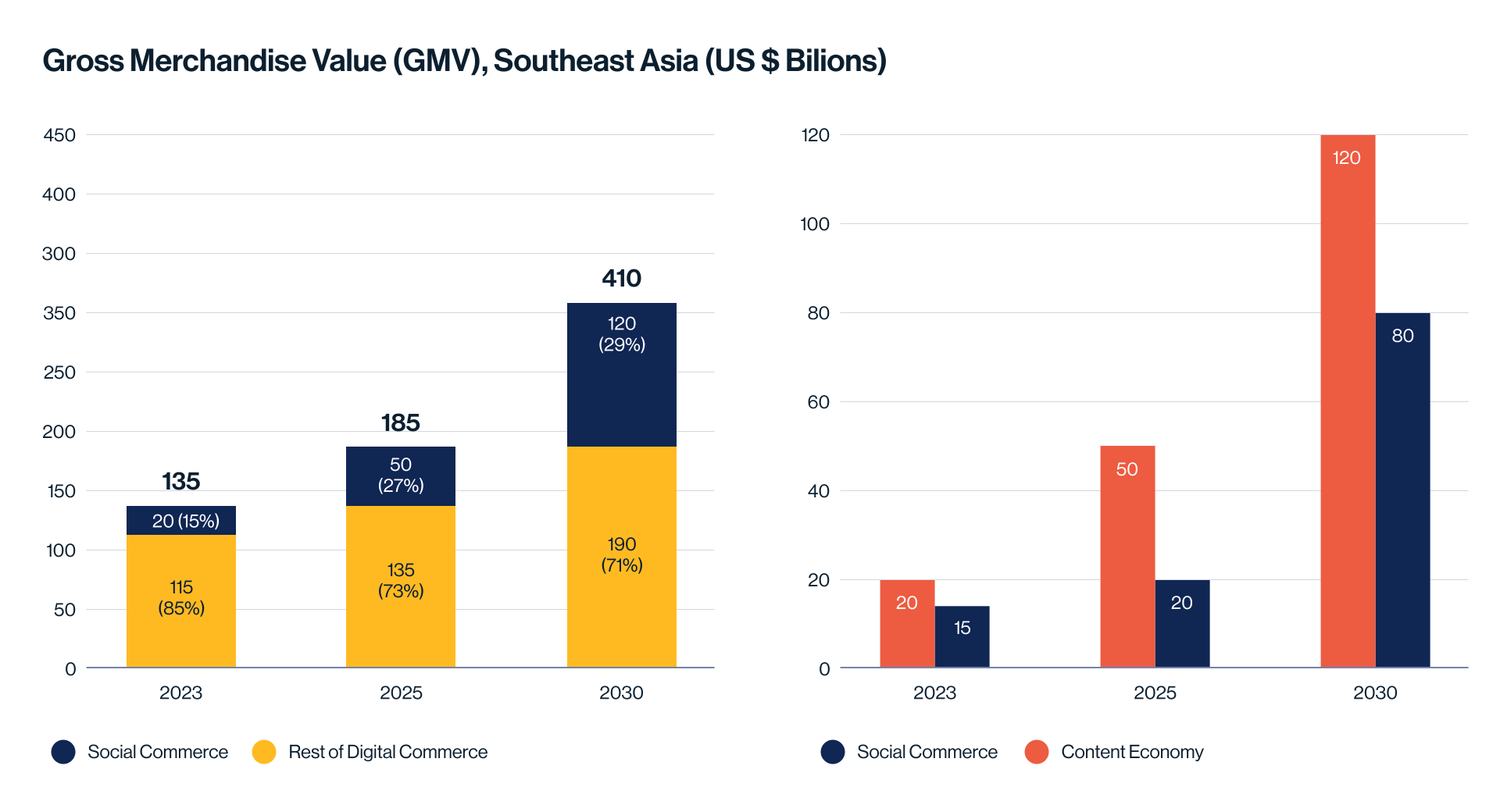
From browsing to engagement, the role of social commerce
While eCommerce platforms are central to the growth of digital commerce what stands out is how the consumers are increasingly discovering and engaging with brands and products.
The region is dominated by the likes of Shopee, Lazada, Tokopedia and fast-growing recent ones such as TikTok Shop, others being Temu, Amazon, Shein and Zalora among many others.
With 90% of consumers accessing the internet through smartphones, platforms are optimized for mobile offering localized apps, regional languages and varied payment options. AI and Advanced analytics are helping in both creation and delivery of customized recommendations and promotions.
Why is social commerce essential for brands in SEA?
- To gain reach: Short form videos play a crucial role as first testing ground, gauging audience resonance and awareness.
- To drive targeted engagement: products are amplified through cyclical flows, live streaming driven by search and intent-based marketing to reinforce demand.
Which are the main differences vs. traditional marketplace?
- Customer Journey
Unlike traditional e-commerce where sales are driven by predictable factors like reviews, popularity, delivery and quality, social commerce is a less linear process. Its success relies heavily on the dynamics of live streams and social media engagement.
- Relevance of local content
We are seeing a merger of content, commerce and community in defining the digital retail experience. Central to this is the role of local creators and key opinion leaders who not only bring credibility and authenticity and reach but also possess a nuanced understanding of local interests, trends and platform algorithms.
- Agility in operational adaptation
Entering the SEA market requires significant adaptation across multiple areas. From navigating operational capabilities, to localised product drops, pricing and promotions that genuinely resonates with the target audience.
International brands entering Southeast Asia ecommerce face complexities ranging from limited local execution capabilities, regulatory constraints, localized product and pricing strategy to need for content that feels authentic to the target consumers.
What’s needed to succeed
Southeast Asia is not just accelerating digital commerce; it is redefining it. Success demands precision: the right entry point, differentiated capabilities, and agile infrastructure.
Where to play: platform strategy & market entry
- Select platforms aligned with target audience behaviour. TikTok, Shopee Live, YouTube Shorts, and established players such as Lazada.
- Prioritise social, live commerce as the primary entry route, while adopting a phased implementation strategy: - Short-form video to test engagement
- Live-streaming to convert intent into sales
- Define a continuous digital marketing roadmap
- Collaborate with local influencers and enablers who understand cultural nuances.
What capabilities to build: content-led commerce engine
Social commerce requires a distinct operating model and expanded capabilities vs. traditional marketplaces.
- Content and marketing fuel top-line growth. Treat content as a funnel and orchestrator of performance:
- Short videos → Livestreams → Conversion
- All three should be integrated, not siloed
- Product selection, pricing and delivery planning, technology, and operations are the enablers required to scale and sustain it.
Tech & operations: infrastructure for speed & scale
To compete, brands must deploy scalable, tech-enabled systems that support rapid iteration and fulfilment.
- AI-powered product listing to enhance catalog visibility, search integration and conversion.
- Content factories for efficient video/image production
- Live-streaming tools to drive real-time engagement
- Affiliate marketing platforms to expand reach and reduce customer acquisition costs
- Local logistics enablers (3PL) for fast, compliant fulfilment
How to win social commerce
Success in Southeast Asia's dynamic digital commerce landscape requires more than just scaling up operations. It demands that brands build and integrate specific capabilities into their operating model.
1. Strategic localisation: Go beyond simple translation to embed a deep understanding of local consumer behaviour and cultural nuances into your core operations.
2. Agile partnerships: Form and manage a network of partnerships with local content creators, influencers, and logistics providers to ensure rapid execution and adaptation.
3. Data intelligence: Establish a data-driven management framework that leverages real-time insights from social, live streaming, and platform data.
By embedding these capabilities, brands can move beyond a mere market presence to build a truly resilient, enduring, and defensible business that is positioned for sustained growth in the region's most vibrant digital markets.
Francesca Padula is a Director of Digital Commerce based in Amsterdam. Devesh Sinha is a Director Digital Commerce based in Bangalore.