Have you switched to Google Analytics 4 yet? Here's why you should wait no longer
Understanding the behaviour of website visitors is vital for brands. While platforms such as Adobe Analytics, Snowplow, Hotjar, and User Logs facilitate customer tracking online, the list isn’t complete without the deserving mention of Google Analytics.
With the launch of Google Analytics 4, it’s both interesting and imperative to understand its implications on businesses, especially given the final deadline to migrate to it is drawing closer.
Digital businesses established in last few years may recall Google’s introduction of an App and Web property in 2019, presented as a beta version of Google Analytics. Soon after, Google presented a viable alternative to Universal Analytics, letting users choose between standard analytics properties or the new version and change the way we measure the data across network and platforms.
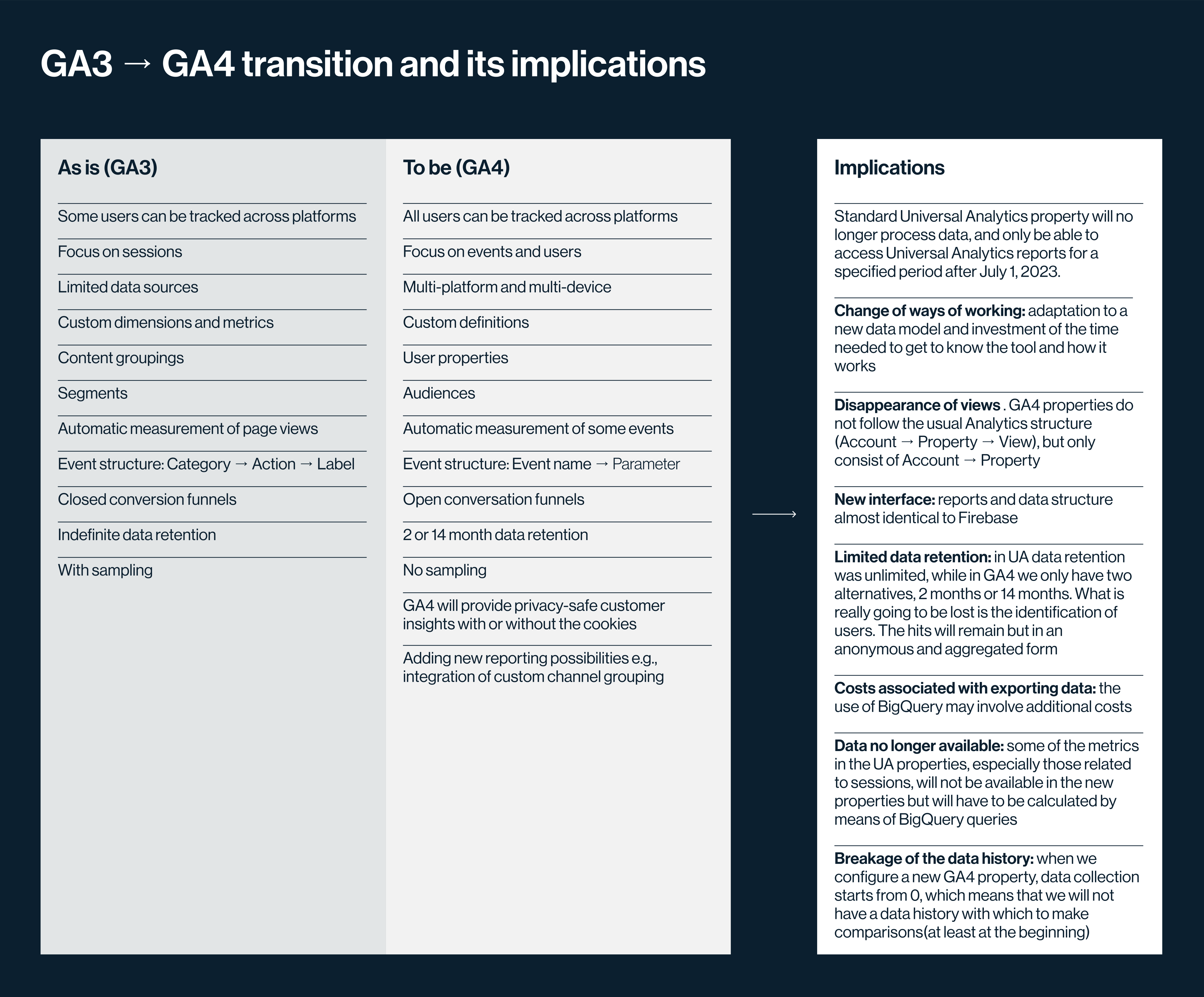
However, Google announced that "starting from July 1, 2023, Standard Universal Analytics properties stopped processing hits", making way for Google Analytics 4. This means that if you are still working with Universal Analytics, you can only access data before that period, and you will only be able to do that until July 1, 2024.
What exactly is Google Analytics 4?
Google Analytics 4 (GA4) is the latest version of Google Analytics. Simply put, it is designed to help businesses and website owners understand their online audience, track user behaviour, and measure the effectiveness of their marketing efforts. GA4 introduces several new features and improvements over the previous version, Universal Analytics (UA).
Now’s the time to gear up for GA4 migration
With previously processed data available only for a few months for late bloomers to get things in order before Google completely shuts down Universal Analytics, it’s time to start planning to migrate to GA4 and avoid any loss of data that a rushed or incomplete transitioning can bring in this case.
Moreover, In GA4, the new data measurement model has introduced structural changes that will push businesses to rethink their entire analytics strategy. The way different views are set up, how unique events and goals are defined, and how custom reports are built – all of this will need to be reworked when migrating to GA4.
Yes, chances are you too will be impacted by the GA4 migration
Changes in Google Analytics implementation can affect stakeholders in organisations across different levels, designations, and functions. Here are some of the key groups that will be affected:

Website owners and administrators
Website owners and administrators use Google Analytics to track and analyse website performance. Changes in implementation can impact their ability to collect and analyse data, which may affect business decisions, user experience, and overall website performance.

Digital marketers
Digital marketers rely on Google Analytics data to measure the success of marketing campaigns, track user behaviour, and optimise strategies. Changes in implementation can affect their ability to access and interpret data, potentially leading to adjustments in their marketing efforts.

Web developers
Web developers are responsible for implementing and maintaining the tracking code on websites. They are directly affected by changes in Google Analytics implementation, as they may need to update the code or adapt to new tracking methods.

Data analysts and data scientists
Data analysts and data scientists often work with Google Analytics data to extract insights and perform in-depth analysis. Changes in implementation may require them to adjust their data processing and analysis methods.

ECommerce businesses
ECommerce businesses heavily rely on Google Analytics to track sales, conversions, and user behaviour on their websites. Changes in implementation can impact their ability to accurately measure and optimise their online stores.

Agencies and consultancies
Marketing agencies and digital consulting firms that offer services related to Google Analytics and web analytics may need to adapt to changes in implementation to continue providing valuable insights and recommendations to their clients.

Content creators and publishers
Bloggers, content creators, and publishers use Google Analytics to monitor the performance of their content, audience engagement, and ad revenue. Changes in implementation can affect their ability to assess the effectiveness of their content strategies.

SEO professionals
SEO professionals use Google Analytics data to track website traffic and measure the impact of SEO efforts. Changes in implementation can affect their ability to monitor SEO performance and make necessary adjustments.

Compliance and privacy officers
Changes in Google Analytics implementation may impact data privacy and compliance considerations. Organisations and individuals responsible for data protection and privacy may need to ensure that the implementation complies with applicable regulations and policies.

End users
While end users (website visitors) are not directly responsible for implementing Google Analytics, changes in tracking methods may impact their online experiences, such as loading times and data privacy. Website owners and developers should consider user experience when making changes.
Embracing GA4 implementation can be a game-changer for your business
There are several reasons why website owners, marketers, and businesses should be proactive about the implementation of GA4. Integrating it into your existing business model is bound to yield quantitative and qualitative results across a wide array of functions.

Data accuracy and insight
GA4 offers more advanced tracking capabilities and event measurement options, allowing you to collect more granular data about user interactions on your website. This can provide you with better insights into user behaviour, helping you make informed decisions to improve your website and marketing strategies.

Futureproofing
Google has indicated that GA4 is the future of its analytics platform, and it's recommended for all new properties. Transitioning to GA4 early can help your business stay up to date with the latest features and ensure that you don't face difficulties when Universal Analytics (the previous version) is eventually phased out.

Improved user-centric approach
GA4 is designed to focus on user-centric data, providing a more comprehensive view of user journeys across devices and platforms. This can help you understand how users interact with your website and apps, even if they switch between devices.

Enhanced cross-platform tracking
With GA4, you can track user interactions across websites, mobile apps, and other digital platforms more effectively. This is valuable for businesses with a presence on multiple digital channels.

Privacy and consent management
GA4 is designed to better align with evolving privacy regulations and user consent management. It offers features that allow companies to respect user preferences for data collection and maintain compliance with data protection laws.

Machine learning and predictive metrics
GA4 incorporates machine learning capabilities, which can help your organisation discover valuable insights and patterns in data. It also provides predictive metrics that can assist in forecasting future performance and user behaviour.

Event-driven tracking
GA4's event-driven tracking system allows for the measuring specific user interactions and events, providing more customized and meaningful data for your business. This is especially beneficial for eCommerce, content-driven sites, and complex web applications.

User engagement metrics
GA4 introduces engagement metrics like engagement rate and engagement time, which can help you understand how users interact with your content and stay engaged on your website.

Custom reporting and analysis
GA4 offers improved customisation and flexibility in reporting and analysis. You can create custom reports, dashboards, and segments tailored to your specific business goals and needs.

Preparedness for industry changes
As the digital landscape and data privacy regulations evolve, being prepared with GA4 can help you adapt to future changes and ensure that your data collection practices remain compliant and secure.
How will the new ways of working affect businesses?
The impact of the new Google Analytics 4 (GA4) implementation on business users can be both positive and negative, depending on how it is leveraged and adapted. Here are some potential changes and their implications:
Positive impacts
Enhanced user insights
GA4 provides more advanced tracking capabilities, allowing business users to gain deeper insights into user behaviour. This can lead to a better understanding of customer journeys and preferences.
Cross-platform tracking
GA4's ability to track user interactions across websites, mobile apps, and other digital platforms can provide a more holistic view of user engagement. This is valuable for businesses with an omnichannel presence.
Improved data accuracy
With GA4's event-driven tracking and user-centric approach, data accuracy is likely to improve. This enables business users to make data-driven decisions based on more reliable information.
Privacy and consent compliance
GA4 is designed to help businesses comply with data privacy regulations by offering features for consent management. This can reduce legal and reputational risks associated with data handling.
Machine learning insights
GA4 incorporates machine learning, allowing business users to uncover valuable patterns and insights in their data. This can lead to more effective marketing strategies and customer engagement.
Custom reporting
GA4 provides greater flexibility for custom reporting and analysis. Business users can tailor reports and dashboards to their specific needs, making it easier to focus on key performance indicators.
Negative impacts
Learning curve
The transition to GA4 may require some time and effort for business users to become familiar with the new features and interface. This learning curve can temporarily affect productivity.
Migration effort
Migrating from existing Universal Analytics properties to GA4 can be a significant undertaking, especially for businesses with complex tracking and reporting needs. This may require additional resources and investment.
Data discrepancies
During the transition phase, data discrepancies or variations between GA4 and Universal Analytics may occur, which can create challenges in comparing historical data.
Adjustment period
It may take time for business users to adapt to the new data collection methods and event tracking system. This adjustment period could affect decision-making and marketing strategies temporarily.
In conclusion, the impact of GA4 on business users can be positive in the long term, as it offers more advanced features and better data accuracy. However, the transition and adjustment period may present challenges initially. To mitigate the negative impacts, it's important for businesses to plan and execute the migration to GA4 carefully and ensure that their teams receive adequate training and support.
Ultimately, GA4 can lead to more informed decision-making, improved customer engagement, and better compliance with data privacy regulations, which can be beneficial for businesses in the long run.
Unlocking the impact of GA4
At Metyis, we combine our technological expertise, market intelligence, insightful strategies, and execution methods to add significant value to our customers’ businesses from end to end, helping them make a long-term transformative impact.
Our experts are here to provide you with comprehensive support and expertise to guide you seamlessly through the GA4 migration process, ensuring a smooth transition and unlocking the full potential of advanced analytics for their digital success.