
The power of Collective Intelligence: a case on how to unlock business potential through collaboration
In the era of rapid technological advancements and interconnected international businesses, organisations must learn to navigate innovation and adaptability. Now, the concept of collective intelligence is fast emerging to transform how companies operate, innovate, and solve problems.
Collective intelligence refers to the cumulative cognitive abilities that emerge when individuals collaborate, exchange knowledge, and combine their insights to achieve a common goal. Unlike conventional top-down models where decision-making is centralised, collective intelligence translates diverse expertise and perspectives of a group to generate innovative solutions and drive organisational success. That said, the story of the origin of collective intelligence is an interesting one, and it takes us back to the dawn of the 20th century.
The origin story of collective intelligence
Back in the year 1906, Sir Francis Galton, a polymath, and a cousin of Charles Darwin, who was renowned for his contributions to various scientific fields including statistics, conducted an interesting experiment that aimed to explore the collective guess of a crowd.
Galton set up a booth with an ox on display and encouraged fairgoers to guess its weight by writing their estimates on pieces of paper. While individual guesses varied widely, Galton found that the average of all the guesses was remarkably accurate.
This experiment demonstrated what later became known as the ‘Wisdom of Crowd’ or ‘Collective Intelligence.’ While individual guesses might be prone to error, the average of a large number of guesses tend to be quite accurate.
Today, with businesses increasingly realising the power of collaboration in navigating uncertainty and fostering continuous improvement, collective intelligence has grown leaps and bounds as a discipline, shaping fields like technology, communication and data analytics.
That being said, its founding pillars, the principles that the concept is established on, remains unchanged. Understanding these pillars is bound to help businesses leverage collective intelligence in the best possible ways to foster favourable outcomes.

The governing principles of collective intelligence
Collective intelligence, the shared intellect, knowledge, and problem-solving capabilities that arise from the collaborative and combined efforts of a group of people, is based on three founding principles.
1. The average of all estimates is more reliable than the average of individual estimates
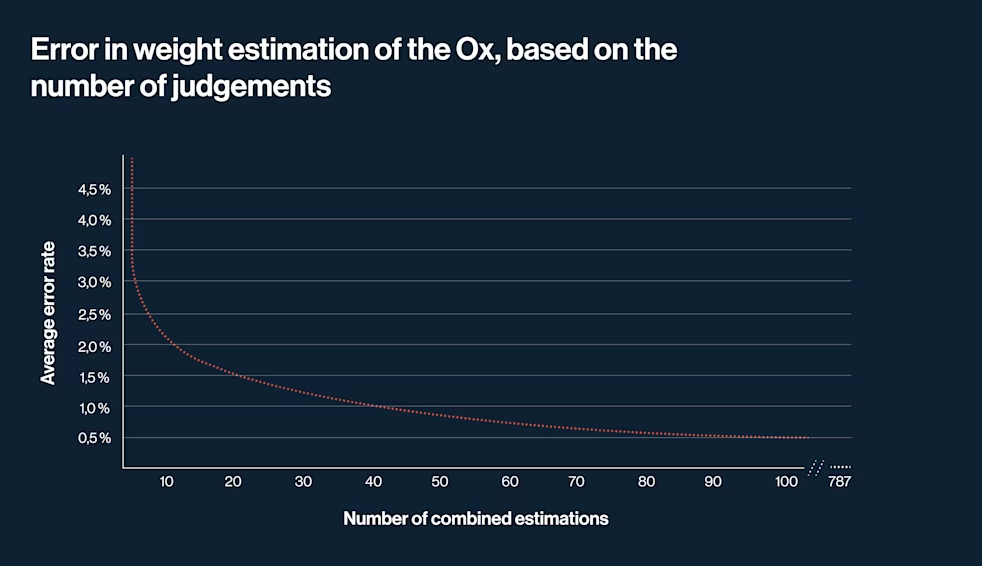
During Galton's experiment, 787 participants were wrong on average by 24kg, but the average of their estimates was only 0.5kg wrong from the target.
2. The larger the crowd, the more reliable the estimate
During the experiment, the quality of the collective estimate does increase with the number as the chart below illustrates.
At the top left, the average error of an individual estimate is at 4.5%, however by combining more and more estimates the error rate reduces gradually until it reaches its minimum with the entire crowd.
3. The gain in reliability brought by each additional estimate decreases
The chart also shows that the error decreases very quickly in the beginning, then less and less quickly. This deceleration illustrates the third principle of the wisdom of crowds.
Additionally, the speed of convergence in response precision also depends on the diversity of participants. A recent study asked lawyers and legal students to estimate the damages awarded by California juries in several civil cases.
The graph below shows their findings:
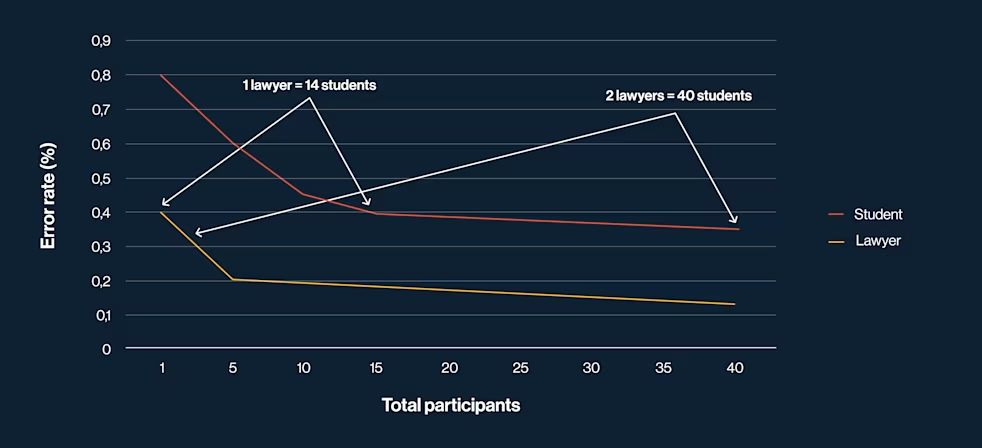
It shows that, in the absence of an available expert, it is feasible to find a solution without compromising quality if the substitution team is diverse and numerous.
Hence, to enhance the quality of the answer, there are two potential approaches: increase the number of experts on the panel or increase the diversity of participants.
From the Business Intelligence to collective intelligence
Business Intelligence (BI) refers to the technologies, processes, and tools that help organisations collect, analyse, and transform raw data into actionable insights for informed decision-making. Essentially, BI involves the use of data-driven techniques to extract meaningful patterns and trends, enabling companies to make strategic choices that drive growth and efficiency.
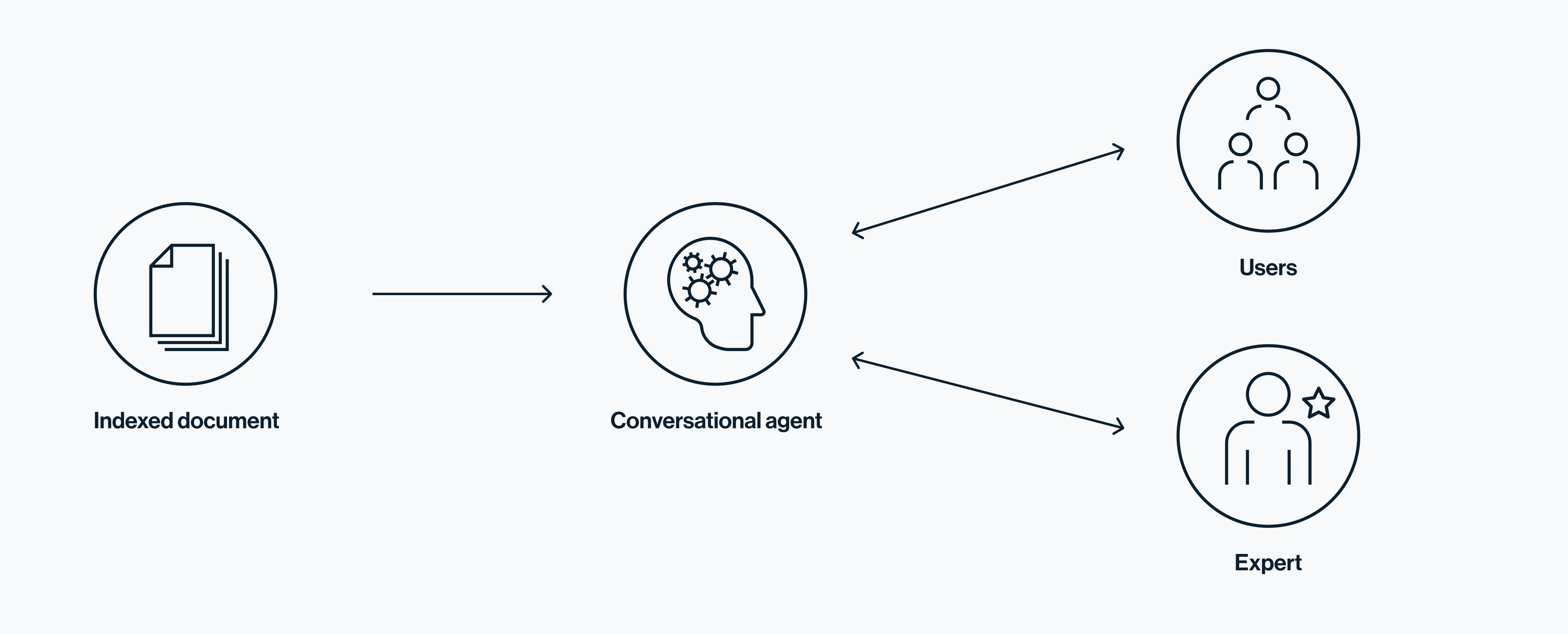
Widely used BI models like the Hierarchal Business Intelligence system represents a top-down framework in which headquarters analyse data, provide insights, and deliver solutions and instructions to operations. Data quality is vital, but its true value emerges when users actively contribute their insights.
Here is where collective intelligence is transforming this hierarchy by managing insights of every stakeholder to uncover valuable ideas for everyone. This transformation yields two main impacts:
- Valuable insights naturally emerge from operations.
- All stakeholders have access to this process and can benefit from the insights.
Collective intelligence for businesses
Businesses must navigate challenges with strategic agility and innovative solutions. Key to success is resilience and adaptability. Collective intelligence could and should be a cornerstone to finding innovative and suitable solutions for businesses.
In essence, tapping into the raw insights generated from everyday operations allows leaders to uncover valuable opportunities. It is about turning operational data into actionable strategies.
Concretely collective intelligence could be used for:
- Productivity
- Strategic Planning
- Innovation and product development
- Employee Engagement
- Customer Feedback
However, developing the right collective intelligence tools that fit your business could be challenging. However, the right partner can help overcome the hurdles.
Xavier Bruetschy is a Strategy & Execution Principal and leader of the Project Management Team at the Paris office. Charlotte Grenier is a Project Manager at the Paris office.